

 If you’re a candidate complaining about an opponent’s stance on an issue, it helps to have a firm and visible position on it yourself.
The subject of artificial intelligence is bedeviling congressional candidates on that basis across the country, and the best example might be in Oregon’s 4th Congressional District.
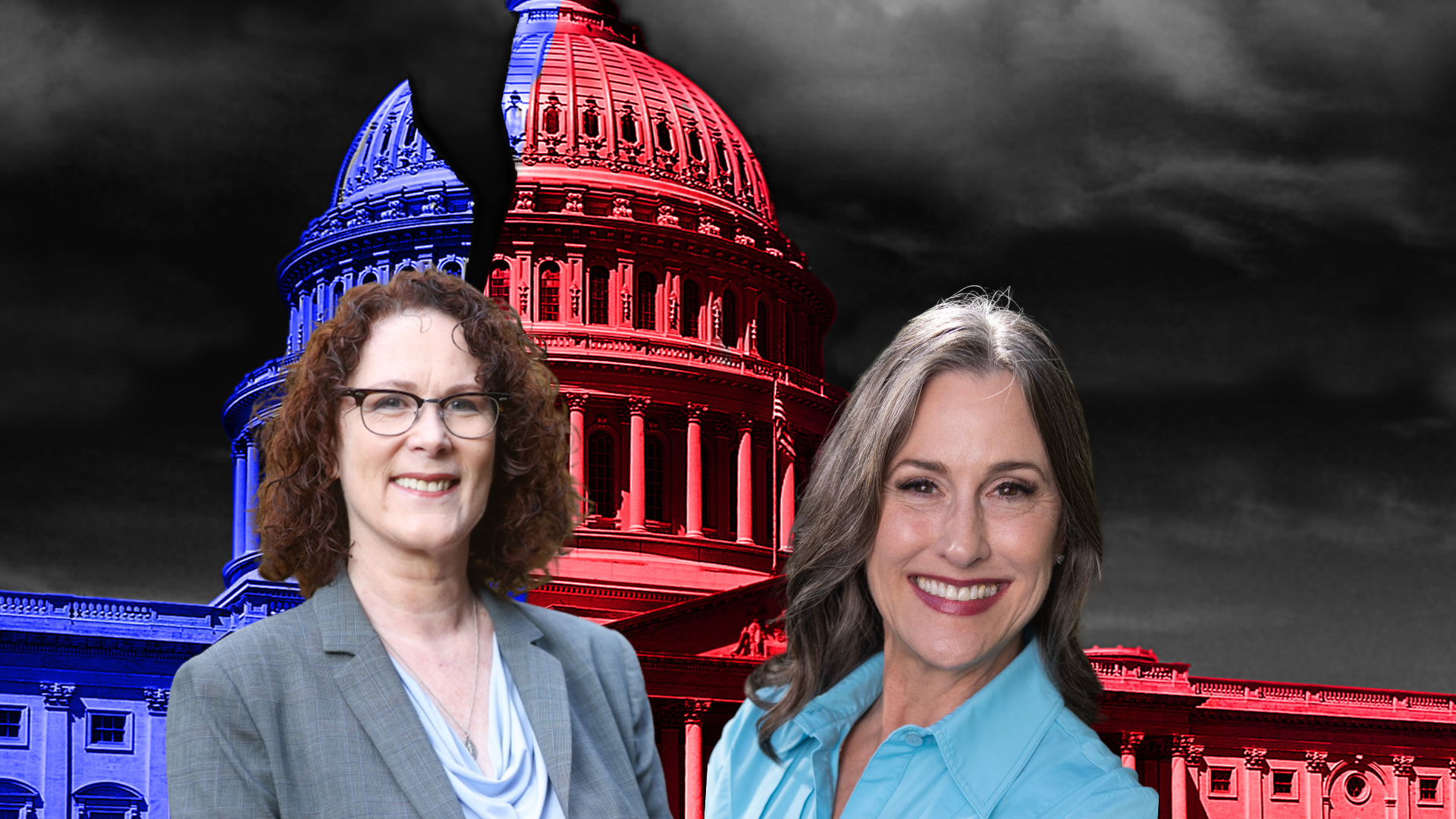
Monqiue DeSpain, the Republican challenger in the Democratic-held district that includes Eugene, Corvallis and the Central and South Coast, has launched her first television ad of the campaign season on the subject of artificial intelligence, about which she fires directly at her Democratic opponent, two-term Representative Val Hoyle.
It’s an important subject, more than worthy of attention.
The risks of fast-developing generative artificial intelligence, exploding into national consciousness over just the last four years and especially in recent months, grew not just from anti-tech enthusiasts but from the industry itself. This is an extremely rare case where even industry leaders have all but begged for federal government regulation — guardrails of some sort. Congress has been essentially comatose to the subject, in the face of widespread constituent requests but in close accord with the staunchly pro-AI preferences of President Donald Trump.
The next term could be different, especially depending on who winds up in control of Congress, but candidates nationally mostly have not been very forthcoming about what they would support or oppose. Voters should have that information before they cast their ballots.
Bringing us back to the Oregon 4th, and that DeSpain ad.
The ad says (in reference to Oregon) that “big tech sees land to develop, water to consume, power to burn” (an unusual argument for a presumably pro-business Republican). It continues, “Val Hoyle’s taken thousands from the AI companies driving the data center boom.”
Sort of, but we enter here into the foggy grays. The ad’s basis is in a May Axios article saying Hoyle is one of a group of Democrats getting support from a Super PAC called Leading the Future. Founded last year, the PAC is indeed packed with tech industry money and supports AI development and innovation, and appears to oppose limitations on it. As of Sept. 23, Think Big PAC, a subsidiary of Leading the Future, reported spending $292,419 on behalf of Hoyle.
That’s not the same, though, as actually contributing to her: This is an independent expenditure, and Hoyle doesn’t control it, and legally can’t coordinate with it.
The money may be considerable, but this doesn’t look like a full-throated alliance.
A spokesman was quoted as saying Hoyle did not seek the Leading endorsement or funding and wasn’t aware of it before it was released, and said “has one of the strongest records in Congress to regulate AI to protect people.”She has opposed federal measures to block state AI legislation (counter to Leading’s position).
On May 13, Hoyle delivered a post on X seeking to be “crystal clear:” “Leading the Future endorsed me because they are working to build a broader coalition around AI regulation and I don’t believe we can put our heads in the sand and ignore the industry. Workers need a seat at the table, because when we don’t have a seat at the table we’re on the menu. I’m glad to be a voice at the table. I believe we need to have clear federal regulation that protects consumers, ensures that workers are part of the conversation on how to move forward and that we are proactively determining the direction of AI development so that the United States doesn’t get left behind.”
From here, that still sounds like keeping one foot in both sides of the argument.
As for DeSpain, her ad does say she has taken no money from “big tech” (which, properly speaking, Hoyle may not have done either). But it also says precisely nothing about how she would address AI or data centers, limiting herself to implicit criticism of tax breaks for such work.
And though her leading ad concerns AI, her website and formal statement seem to be devoid of mentions of it or data centers. In her statement on the economy, she says, “I will support policies that rebuild American manufacturing, lower the cost of goods, and improve affordability so Americans can live and work with pride and dignity. Prosperity requires government to get out of the way.”
That does not sound consistent with regulation strongly limiting AI, which she seems not to have addressed directly at all.
And, of course, the president of DeSpain’s party is as fierce a backer of unrestricted AI development as anyone, maybe even inside the industry.
So neither candidate been super clear about AI. But then, neither have most other congressional candidates, including most of those in Oregon.
A voter’s part in this is to demand more concrete answers. Congress will be faced with a series of complex and important tech decisions in the coming term, and voters should know from all their contenders what they’ll be getting.
Randy Stapilus has researched and written about Northwest politics and issues since 1976 for a long list of newspapers and other publications. This guest commentary is from news partner Oregon Capital Chronicle, and it may or may not reflect the views of The Corvallis Advocate, or its management, staff, supporters and advertisers.
Do you have a story for The Advocate? Email editor@corvallisadvocate.com