


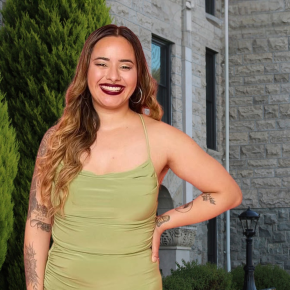
 Yulissa Magaña, a Master of Counseling in Clinical Mental Health student from Corvallis, was recently invited to serve on the Oregon Governor’s Racial Justice Council. The Council “gives communities who have been historically excluded from decision-making tables more meaningful access to and a voice in the policy making that directly impacts the lives of Oregonians of color.”
A first-generation college student and a Mexican American, Yulissa is incredibly passionate about advocacy and equity in higher education and mental health. We spoke with her to learn more about her experiences in counseling and her goals for the future.
What led you to working in the mental health field and motivated you to pursue a degree in counseling?
My journey into the mental health field began about three years ago when I started working in crisis intervention. I was drawn to this work because I’ve always had a deep desire to help others feel seen and supported during some of their most difficult moments. I’ve also worked with the houseless population, both in shelter and community settings.
Over time, I realized how much representation and advocacy are needed in this field, especially for Spanish-speaking and underserved clients. That awareness, and my passion for breaking barriers to care, motivated me to pursue a degree in counseling so I could continue to serve my community in a more meaningful, culturally responsive way.
What has your experience in higher education been like? What are some of the challenges of pursuing higher education as a first-generation student and a person of color?
Navigating higher education as a first-generation student has been both exciting and challenging. I’ve worked hard to maintain a 4.0 GPA while balancing personal and professional responsibilities, but the emotional and financial challenges can sometimes feel overwhelming. There have been moments of self-doubt, especially when entering academic or professional spaces where I haven’t always seen people who look like me. Still, this journey has helped me find my voice and realize that I belong in these spaces just as much as anyone else.
Being part of the Racial Justice Council represents a chance for advocacy, representation, and heart. My voice is for the Latinx community and for those who may feel afraid to speak up. It’s not always easy to step into unfamiliar spaces, but I’ve learned that change often starts with discomfort and that it’s worth it when you’re fighting for inclusion and equity.
Do you have any advice for other counseling students?
My biggest advice would be to embrace the process of growth and discomfort. Counseling isn’t just about learning theories; it’s also about learning who you are as a person and as a future clinician. It can be vulnerable and challenging, but it’s also incredibly rewarding.
I’d also tell new students not to be afraid to ask for help or to seek out mentors who understand their experiences. You don’t have to have everything figured out right away. Give yourself grace, stay curious, and remember that your unique perspective is your strength.
What do you hope to accomplish in the counseling field in the future?
My long-term goal is to continue working toward accessibility, advocacy, and representation in mental health care. I want to build bridges between communities and services, particularly for Spanish-speaking individuals and people of color who often face systemic barriers to care. I hope to contribute to creating spaces that are inclusive, affirming, and culturally responsive. Whether through counseling, community outreach, or policy advocacy, my mission is to empower others to find healing, belonging, and hope.
Anything else you would like to share?
I’m truly honored to be part of this community and excited to continue growing. Being involved with the Racial Justice Council feels like a meaningful step toward positive change. My work in mental health and advocacy comes from a place of love for my culture, my community, and the belief that representation truly matters. Every small effort to make services more accessible and inclusive brings us closer to a world where everyone feels seen and valued.
Do you have a story for The Advocate? Email editor@corvallisadvocate.com