

A 34-year-old rule exempting some commercial logging projects on federal lands from environmental review is unlawful, a federal judge recently ruled.
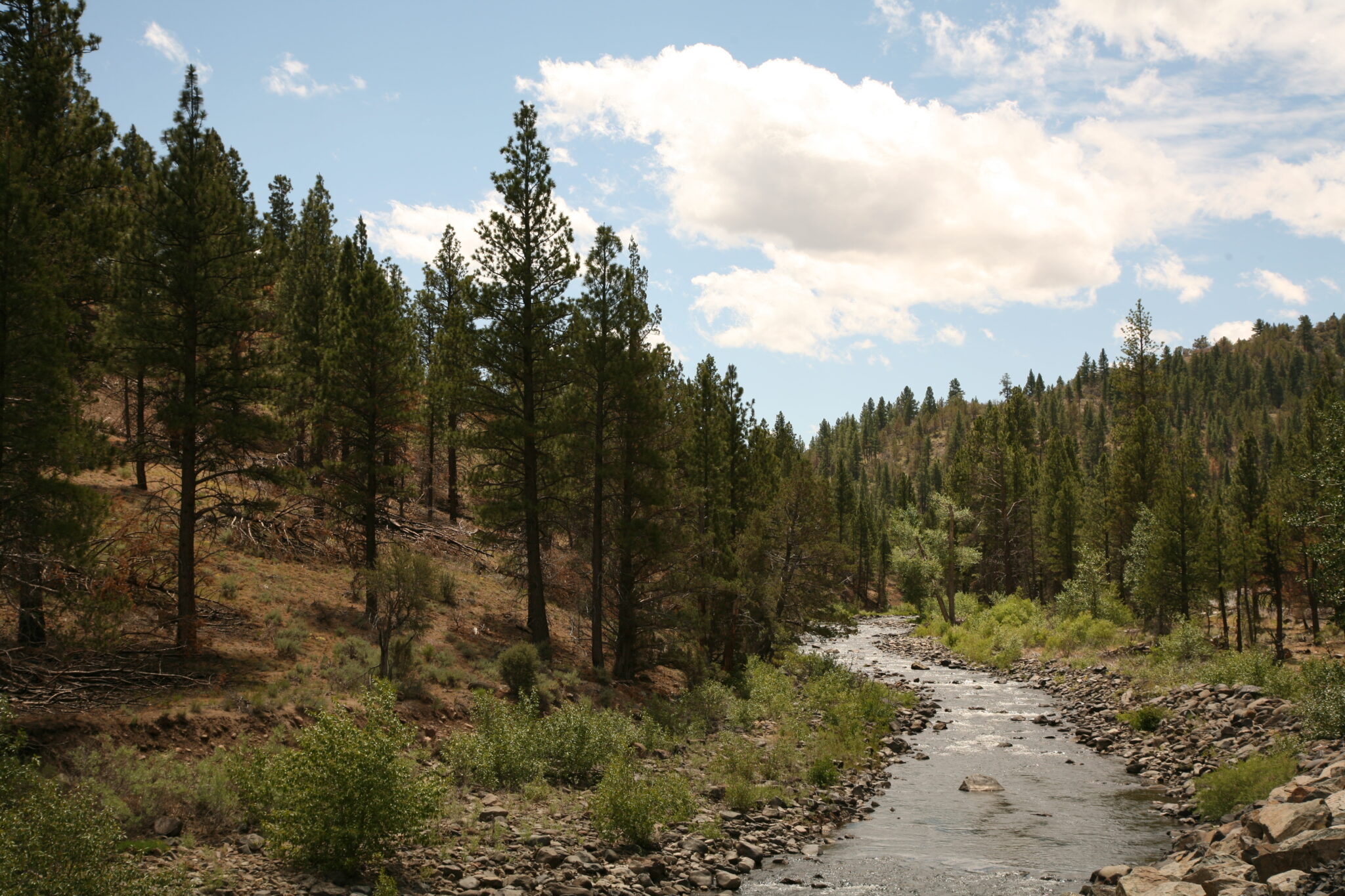
Judge Michael McShane in the U.S. District Court in Medford earlier this month struck down the exemption, and with it, reversed recent approvals for three commercial logging projects covering tens of thousands of acres in Fremont-Winema National Forest in southern Oregon.
The decision is the result of a 2022 lawsuit brought against the U.S. Forest Service by regional conservation groups Oregon Wild, WildEarth Guardians and GO Alliance.

Since 1992, the U.S. Forest Service has been able to bypass environmental reviews required by federal law for logging projects on federal land, if the logging is meant to “improve forest stand conditions,” habitat or prevent wildfires, without “significant effect” on the human environment.
The agency established the carveout as one of 25 that could be invoked to circumvent a rigorous environmental review process in certain situations that require logging and prescribed burns on federal forestland.
But in 2022, after the U.S. Forest Service used the exemption to approve without environmental review three large and controversial forest restoration and wildfire prevention projects in the Fremont-Winema that involved logging roughly one-third of the 91,000 acres the projects encompassed, local conservation groups sued.
Oregon Wild, WildEarth Guardians and GO Alliance said in the suit that the agency’s exclusion to environmental review for such projects is fundamentally flawed and a “logging loophole,” because it is being used to justify bypassing environmental reviews on large logging projects of thousands of acres that most certainly will have significant environmental impact.
“There is not — and never has been — any legal basis for the agency to use a regulation intended for small, innocuous projects for massive commercial logging projects instead,” said Oliver Stiefel, a Crag Law Center attorney who represented the conservation groups, in a statement.
McShane agreed.
“Because the record before the court does not show the Forest Service considered the impact of thinning (logging) at any scale, commercial or otherwise, the court cannot conclude the Forest Service engaged in a ‘reasoned decision’ regarding environmental impacts of the actions authorized by (the exemption),” he said in the ruling.
The U.S. Forest Service has not yet filed an appeal in the case and did not respond by Tuesday to a request for comment.
Exclusion used excessively
The specific exclusion at the heart of the lawsuit allowed for logging and prescribed burns to go forward on national forestland without environmental review if the logging and burns would not cause significant environmental harm, and if they are done in service of forest and habitat improvement or wildfire prevention.
The exemption couldn’t be used if logging activities required building more than 1 mile of new road, or if herbicides would be used, but it did not have any other limitations, including on the amount of logging that could reasonably take place without having a “significant effect” on the environment.
By the early 2000s, the specific exclusion was being used frequently to authorize commercial logging without review on federal land, according to a Government Accountability Office review of Forest Service vegetation management projects from 2003–05.
The office found it was the most used of the categorical exemptions to environmental review, and was used to to bypass such reviews on nearly 2.5 million acres of forest logged as part of “vegetation management” projects during those years.
WildEarth noted in the suit that the 1992 exclusion was established for improving forests, not to make it easier to log them.
“The Forest Service did not intend for the categorical exclusion to apply to commercial thinning,” the group wrote.
But the Forest Service argued that it’s been long used to advance commercial logging projects, that the agency is staffed with scientists who know best practices and that it’s needed to avoid litigation that often comes from environmental review processes that can slow the agency’s work down.
By Alex Baumhardt of news partner Oregon Capital Chronicle
Do you have a story for The Advocate? Email editor@corvallisadvocate.com