

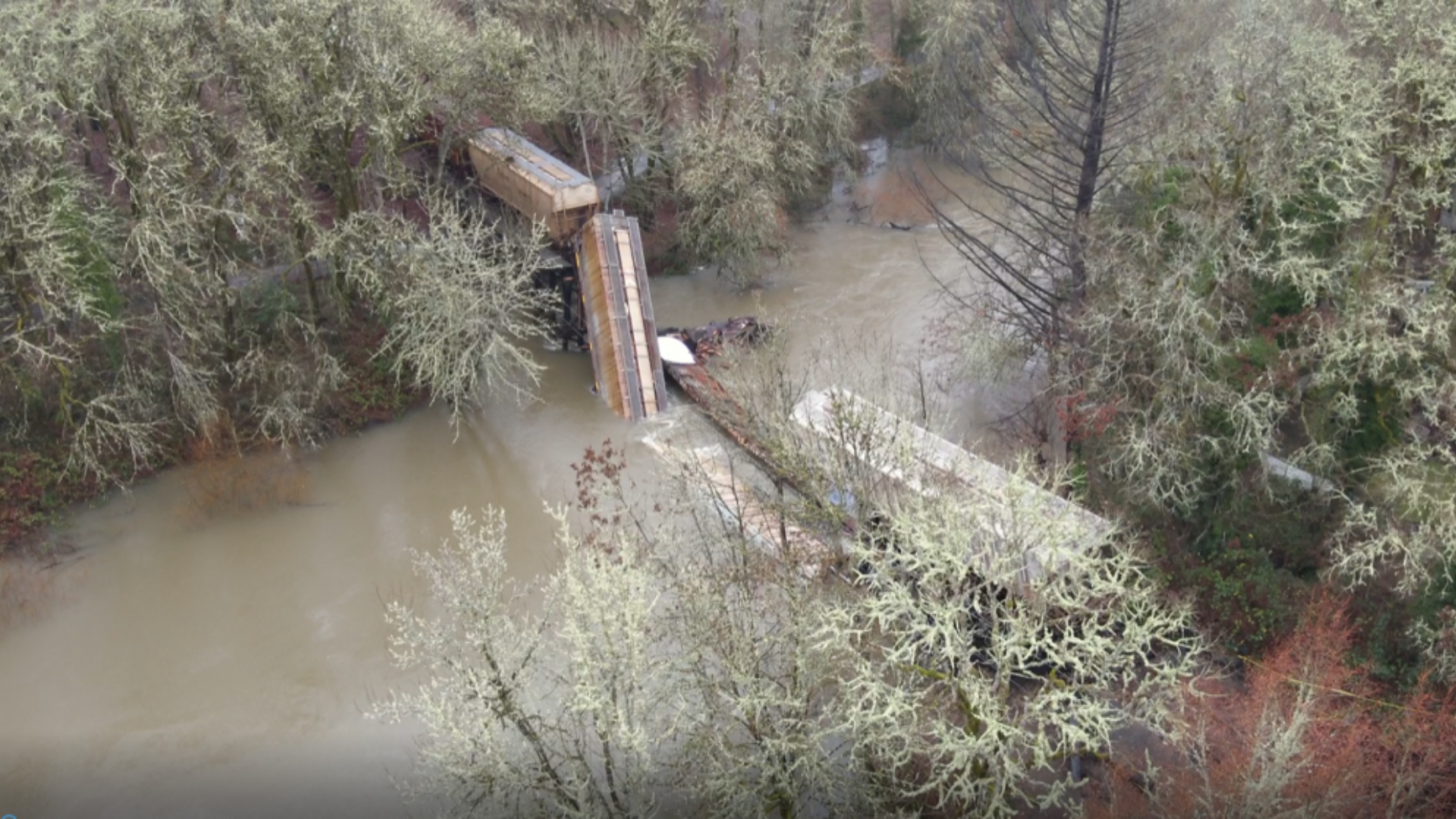
Portland & Western Railroad has paid $62,400 to the Oregon Department of Environmental Quality to settle up over last year’s Corvallis bridge collapse — you know, the one that sent a train car and roughly 200 tons of fertilizer straight into the Marys River. Here’s what happened.
Back on Jan. 4, 2025, a railroad bridge gave out under a 19-car freight train hauling pelletized agricultural fertilizer. One car ended up fully submerged, another sort of hung halfway into the water. Not exactly a great start to the year for anyone downstream.
DEQ didn’t let it go quietly. In November, the agency hit Portland & Western with an $81,600 fine and told the company to go inspect all of its over-water bridges for structural problems.

Also, the DEQ took notice of some relevant history; this wasn’t this particular bridge’s first bad day. Back in 2022, it caught fire, and it took crews almost nine hours to put it out.
DEQ’s read at the time was blunt, finding that insufficient repairs after that fire amounted to reckless disregard, and that reckless disregard is what set the bridge up to collapse. As the agency put it in its penalty notice, disregarding the risk posed by a train accident involving freight like chemicals “constituted a gross deviation from the standard of care a reasonable person would observe in that situation.”
The company, in turn, did what companies do, it appealed.
Portland & Western pushed back on DEQ’s characterization, arguing the derailment hadn’t “had a significant adverse impact on human health and the environment.” The company also took issue with whether DEQ even had the authority to demand any inspections at all, period.
The Original fine was bigger
So, how’d we land at $62,400? DEQ ended up dropping the inspection demand entirely as part of the settlement, and agency records show it also decided this spring that Portland & Western’s cleanup after the collapse was adequate — enough to knock $19,200 off the original $81,600 civil penalty . Make of that what you will.
Worth remembering why any of this matters beyond the dollar figures; urea fertilizer, the kind that ended up in the Marys River, isn’t just an inconvenience. A spill like this can result in algae blooms that suck oxygen out of the water; it then breaks down into ammonia, which is toxic to fish and other marine life.
To contact Hallie Greenberg about this story, email office@corvallisadvocate.com
Do you have a story for The Advocate? Email editor@corvallisadvocate.com