

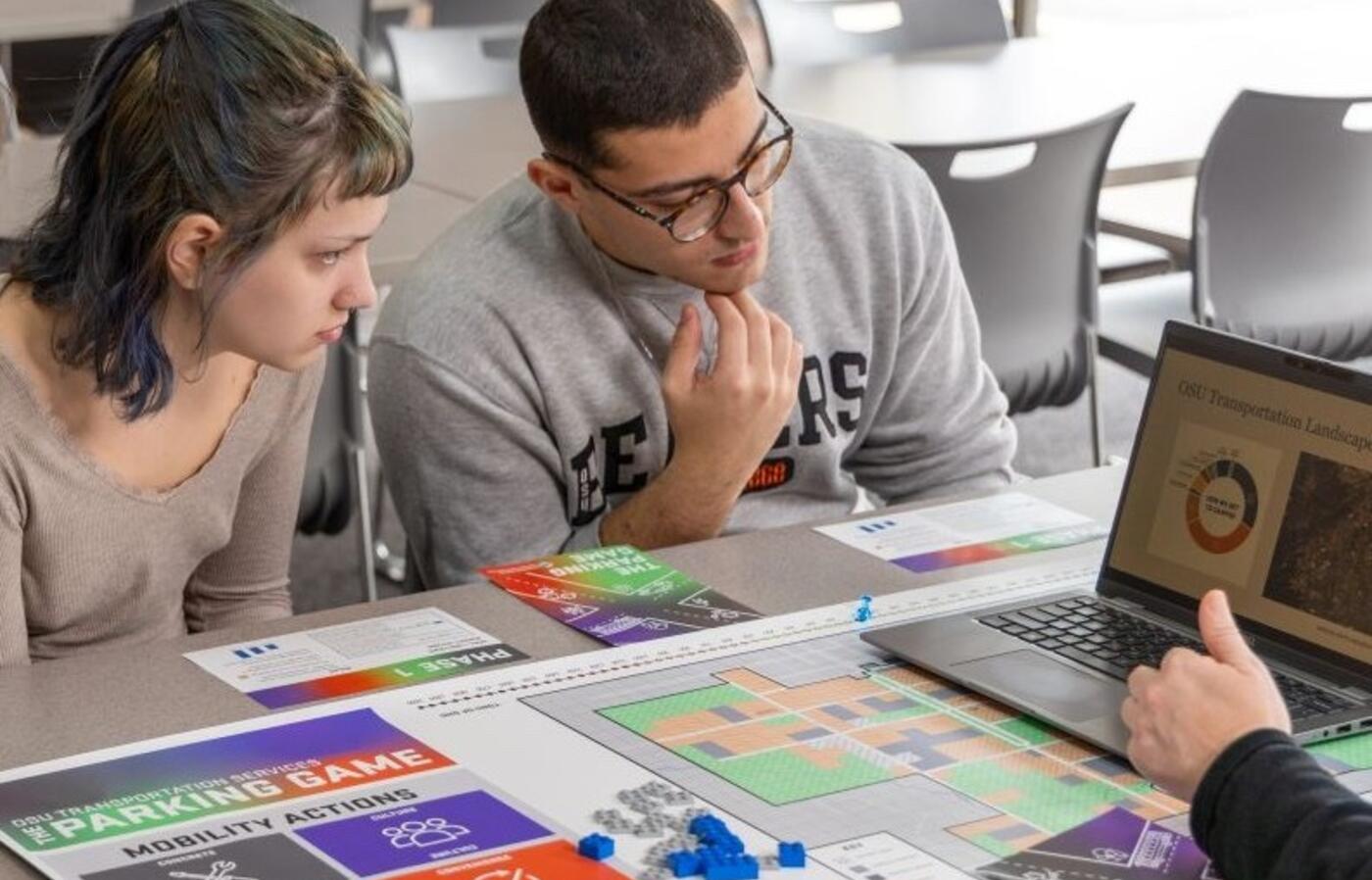
 Parking on the Corvallis campus can be a polarizing topic. Car commuting is necessary for many, but also causes environmental problems and safety risks. Obtaining a parking permit and finding spaces in popular lots during peak times can lead to frustration for drivers.
To help community members better understand the factors influencing OSU parking infrastructure, Transportation Services created a unique outreach tool: a board game.
The Parking Game debuted at a sustainable transportation planning workshop in 2019. Since then, it has reached various OSU departments and student groups along with engineering and sustainability classes.

Game players must grapple with the same problem Transportation Services addressed with its 2020 Sustainable Transportation Strategy: the need to accommodate 1,600 new daily trips to campus over the next decade. Players must find space for all those vehicles on campus with a limited budget, and they often come to surprising conclusions.
For example, multi-level parking garages seem like an obvious solution for squeezing in more parking spaces. Why not build up instead of out? But it’s not that simple, says Sustainable Transportation Manager Sarah Bronstein.
“The costs of a parking garage are so big that they dwarf the costs of all other programs,” she said. Plus, players must wrestle with which available spaces would be sacrificed to make way for a garage.
Players must also make tough choices about community and environmental impacts. Raising parking permit prices leads to fewer driving trips, costs and greenhouse gas emissions, but also cause community sentiment to nosedive. Lose too many “community relations” points, and you risk losing the game.
Letting players discover the limits of parking expansion and explore other possibilities is key to the game’s design. And over time, Bronstein said, the game has come to help players visualize alternative solutions that don’t require more parking spaces at all.
Sara Hamilton, Transportation Services outreach coordinator and a frequent Parking Game facilitator, said she’s seen the game shift players’ perspectives on parking and transit challenges in real time.
“What I have noticed is that people first focus on the things that are most impactful for them personally,” Hamilton said. “But then they warm up to the needs of all of the users and try to consider people who use a mode that they would never use. The game helps make that group of commuters real.”
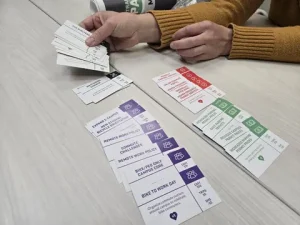 Hamilton said players approach the game with a wide range of priorities and strategies. Some want more parking in specific areas of campus. Others focus on maintaining community support or reducing greenhouse gas emissions. She enjoys watching players work through the complexity of competing goals together.
In 2023, Transportation Services put the Parking Game materials online for anyone who wanted to tailor the game to their own campus, and after hearing about it at a statewide meeting, both the University of Oregon and the City of Eugene ended up making their own versions. Bronstein and Hamilton also led a game session at the Washington Oregon Higher Education Sustainability Conference earlier this year.
In the future, Bronstein hopes to refine the game so it doesn’t require a trained facilitator. In the meantime, it continues to spark conversations.
“We’ve already achieved our goals and then some by having it be this great tool for talking to students, OSU employees and community members about the work we do in Transportation Services,” Bronstein said. “And we’re doing it in a way that feels more fun than lecturing people.”
Any group interested in playing the Parking Game can contact Transportation Services to schedule a facilitated session. The gameboard, cards and instructions for play are online here.
By Molly Rosbach and Rebekah Pike
Do you have a story for The Advocate? Email editor@corvallisadvocate.com