

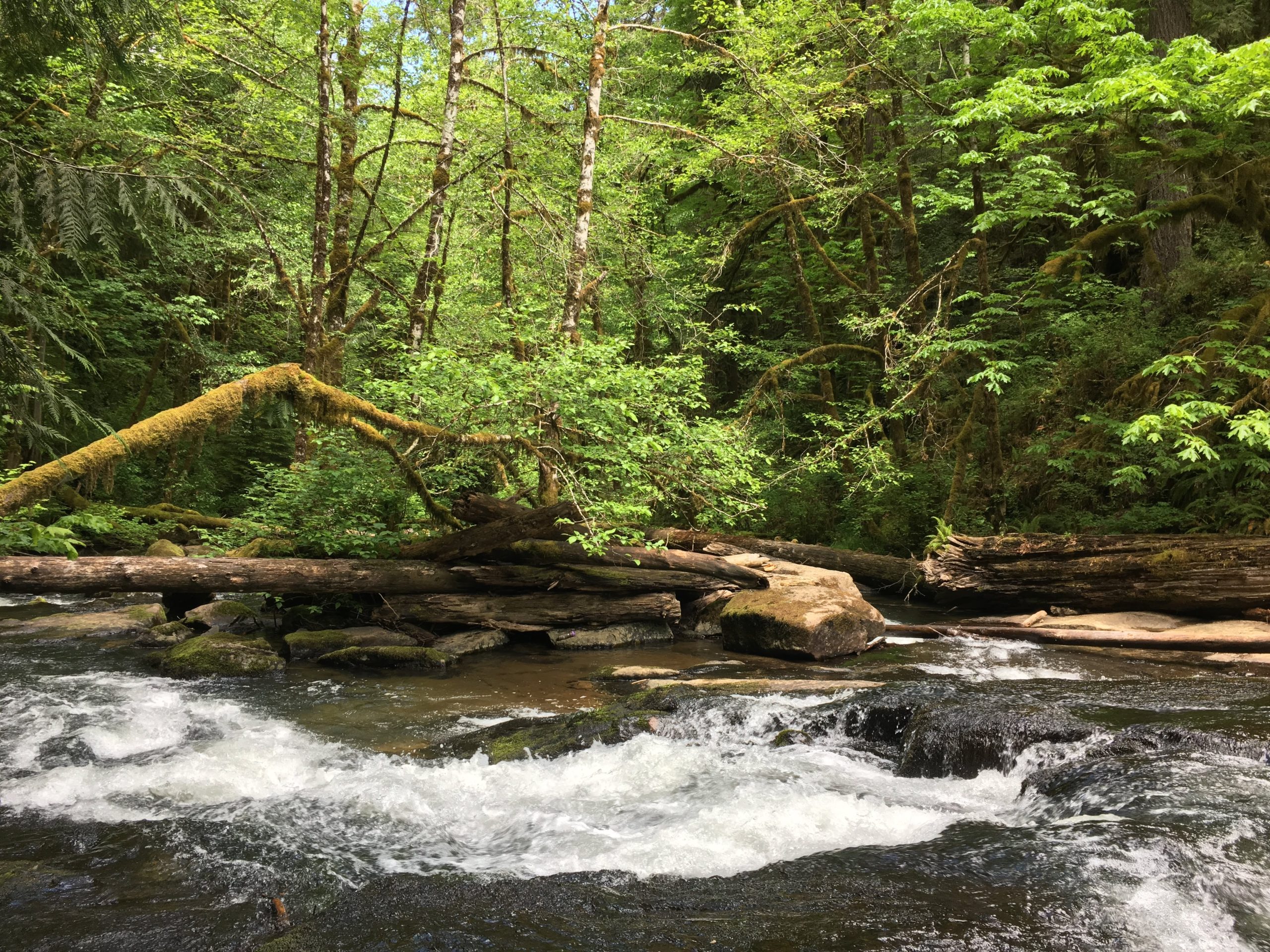
 The Bureau of Land Management is seeking to eliminate old-growth and wildlife protections across nearly 2 million acres of public lands. Clearcutting is part of that plan, the idea being to facilitate “maximum” logging capacity.
Marys Peak and Alsea Falls are among the threatened areas the BLM manages across Oregon. Other notable sites include parts of the Sandy River and North Fork Clackamas, the Valley of the Giants, the Upper Molalla River, and Crabtree Valley.
On Thursday, the Trump Administration published what is called a notice of proposed revisions for management plans that encompass Western Oregon Bureau of Land Management, or BLM forests.
The proposed revisions target lands for logging and reduced protections that had previously been set aside for conservation. Many of these areas contain some of the last remaining low-elevation old-growth forests in the state.
The proposal for these lands includes reducing logging buffers for endangered fish, potentially eliminating old-growth reserves, and expanded clearcutting and similar aggressive logging practices, which the agency has previously acknowledged increase fire risk.
“The BLM is already logging old-growth. They’re already clearcutting,” said Oregon Wild Staff Attorney John Persell. “This proposal would double down on the most destructive aspects of public lands management across even more of the landscape, prioritizing greed and political favors over the long-term health of our forests and communities. It puts wildlife habitat, salmon recovery, drinking water, and nearby communities at greater risk.”
This proposal is the latest in a set of Trump administration executive orders, rollbacks to environmental protections, and reductions in public transparency and engagement that impact for public lands and forests across the country.
Oregon Wild believes that placing logging above all other public lands uses, like recreation, wildlife habitat, and drinking water is a violation of the O&C Lands Act of 1937 and subsequent environmental laws and court rulings.
After finalizing its 2016 Resource Management Plans for Western Oregon, which withdrew BLM lands from the Northwest Forest Plan and significantly weakened conservation protections, the agency began to propose increasingly aggressive logging projects. Oregon Wild and other conservation groups in Oregon have challenged numerous BLM logging proposals in recent years that have targeted mature and old-growth forests.
Courts have sided with conservation groups, highlighting that, even under the significantly weaker safeguards of the 2016 RMPs, the agency has regularly violated its own rules and bedrock environmental laws in order to facilitate commercial logging projects. In recent litigation, the BLM has even been accused by those who worked for the agency of fabricating analysis that would allow more aggressive logging.
“The public does not want to go back to the days of rampant old-growth clearcutting. They don’t want to go back to dead salmon and polluted rivers, or see their favorite places on public lands liquidated in order to maximize profits for the greedy few,” said Chandra LeGue, Senior Conservation Advocate for Oregon Wild. “These are treasured public lands, and we’re going to fight for them.”
How to submit a public comment
The notice kicks off a month-long public comment period, it ends on March 23. The agency does not plan to hold any public meetings.
Submit public comment here.
Alternatively, you can email: BLM_OR_Revision_Scoping@blm.gov.
By Hallie Greenberg
Do you have a story for The Advocate? Email editor@corvallisadvocate.com