

The Benton County Health Department (BCHD) was recently notified that measles has been detected in wastewater sampling in an area that includes Corvallis and Lewisburg. This means that there is, or has recently been, at least one person infected with the measles virus within the Corvallis-Lewisburg area. To date, no confirmed measles cases have been reported in Benton County.
In October 2025, the Oregon Health Authority (OHA) partnered with Oregon State University (OSU) to begin measles testing in wastewater across Oregon. A sample collected in Benton County on January 21, 2026, tested positive for the measles virus. Wastewater monitoring occurs in sewage and does not mean that drinking water is unsafe.
Since 2026 began, three measles cases have been reported in Oregon. Two were recently confirmed in Linn County and one in Clackamas County. BCHD is working closely with OHA and other local health officials to monitor and prevent the spread of measles through outreach and education to healthcare providers and the public. The risk for widespread measles in Oregon is low due to measles, mumps, rubella (MMR) vaccination and rapid case identification and response efforts.
Measles is a serious illness caused by a virus. It spreads easily through the air when someone with the virus coughs or sneezes. The MMR vaccine offers the best protection against measles. People should be aware of their vaccine history and watch for any symptoms.
Symptoms include rash, fever, cough, runny nose, and red eyes. If people have these symptoms, they should call their health care provider or an urgent care clinic. People who have these symptoms or who may have been exposed should call ahead to healthcare locations before entering their buildings to reduce the risk of spreading the virus to others.
People are considered immune to measles if any of the following apply: You were born before 1957, you are certain you have had measles, or you have been fully vaccinated for measles, which means you’ve had two doses.
“Measles was previously eliminated in the United States thanks to routine childhood vaccination. With increased vaccine hesitancy, we are seeing higher rates of measles cases across the nation,” said Dr. Carolina Amador, M.D., MPH, Benton County Health Officer and Pediatrician.
About measles
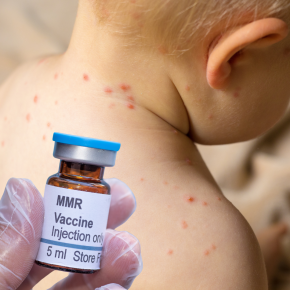
- Measles is most dangerous for people who have not been vaccinated, pregnant people, babies under 12 months, and people with weakened immune systems.
- The symptoms of measles start with a fever, cough, runny nose and red eyes followed by a red rash that begins at the head and spreads to the rest of the body.
- People are contagious with measles for four days before the rash appears and up to four days after the rash appears.
- After someone is exposed, illness usually develops in seven to 14 days. In rare cases, it can take up to up to 21 days for symptoms to occur.
- Anyone who has been exposed or believes they have symptoms of measles should first call their health care provider or urgent care to avoid spreading measles.
- The MMR vaccine offers the best protection from measles. Two doses of MMR vaccine are about 97% effective at preventing measles infection.
More information about measles, including local guidance for parents and resources can be found on BCHD’s website.
BCHD says they are continuing to monitor closely and will provide updates if any cases are identified. Anyone with questions about measles or the MMR vaccine should call their healthcare provider or their local county health department. For Benton County Health Department, call 541-766-6835.
Do you have a story for The Advocate? Email editor@corvallisadvocate.com