


There’s a big difference between reading about common injuries in farm animals and treating a horse’s wound in real time while its owner watches anxiously.
A major challenge for students planning to go into veterinary medicine is the gap between expectation and reality. Faculty from OSU’s Carlson College of Veterinary Medicine and College of Agricultural Sciences are addressing that gap with a study abroad program in Mexico where students work with animals alongside licensed veterinarians.
“Only about a quarter of all students who start out pre-vet will actually graduate pre-vet, and just a tiny percentage will make it to vet school. So how can I help?” said José Uscanga Aguirre, coordinator of student outreach and recruitment in CAS. “My dissertation research was on the value of study abroad for pre-veterinary students to become veterinarians. We try to expose the students to the reality of the profession as closely as we can.”
This year’s trip from June 16-27 was the second from OSU, but Uscanga started bringing pre-veterinary students to Mexico in 2018 when working at Oklahoma State University with Dr. Kelsey Jurek, who now works in large animal emergency medicine at the Lois Bates Acheson Veterinary Teaching Hospital. Uscanga and Jurek happened to start jobs at OSU within two months of each other in 2023.
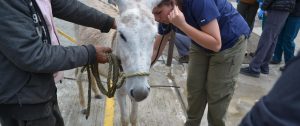
Uscanga’s role in Oklahoma was similar to his work here in Agricultural Sciences, where animal sciences is one of the college’s largest departments and the majority of students in the major choose the pre-veterinary medicine option.
“A lot of students I knew would have a hard time going through the pre-requisites like chemistry and also not being able to fulfill the hands-on veterinary experience requirements for veterinary school,” which average 2,000 hours, he said. “There’s a lot of research about how difficult it can be for ag students to realize they may need to consider a backup plan, and advisers have a hard time getting them to see that.”
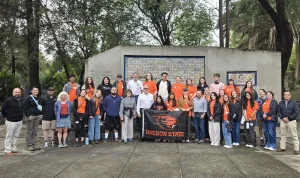
Drawing from his research on study abroad, Uscanga built a program with university colleagues in Mexico as a way to give students international experience without a huge price tag. The total fee for the trip was $1,189 this year, making it a highly affordable study abroad option. This year, the program had 26 pre-vet students, some majoring in biology in the College of Science and some in animal sciences in CAS, as well as two current veterinary students from CCVM.
On the 10-day trip, students worked with Jurek, Dr. Chuck Estill from CCVM, Dr. Giovanna Rosenlicht from CAS and licensed veterinarians from Mexican non-governmental organization TSIIMIN and the Universidad Nacional Autónoma de México. They provided free care to working farm animals, mostly horses and donkeys, along with dogs and cats, and this year were able to treat more than 600 animals across six clinic days in central Mexico. They did routine procedures like deworming and hoof care, as well as spay and neuter operations for the small animals, and also provided education for the owners on topics like proper tack fit to avoid injury. And when they were done with field clinics, they did cultural activities like visiting the pyramids at Teotihuacán outside of Mexico City.
At the end of the trip, the students also made posters on how the cultures of the U.S. and Mexico influence the way veterinary medicine is practiced in the two countries. In many cases, the differences are more a question of rurality; the limitations students see in central Mexico are similar to what owners and animals might face in small towns across the U.S. where there aren’t enough veterinary providers.
“Often it has to do with the resources we have available during these field clinics,” Jurek said. “A lot of it has to do with education. These community members really care about these animals; they’re part of their family and an important part of their day-to-day living. But oftentimes they haven’t had the same access to education regarding animal husbandry that we see here in the U.S.”
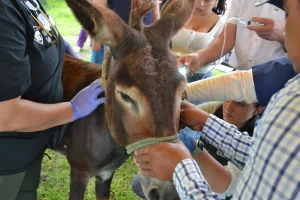
That means the veterinarians have a different expectation and responsibility during their single visit with the animals in Puebla, she said, as they don’t have the luxury of providing follow-up care later.
The rural U.S. also has a great need for veterinary practitioners, and Uscanga and Jurek hope that by gaining exposure to this style of practice in Mexico, more students will be open to considering working in a rural part of the U.S.
“Not only are we offering them this cool opportunity to do a study abroad with field days to get hands-on experience and work for the betterment of the community and their animals, but it’s also an opportunity for the pre-vet students to work hand-in-hand with current veterinary students to ask questions and get a sense of what they’re going through,” Jurek said.
Do you have a story for The Advocate? Email editor@corvallisadvocate.com