

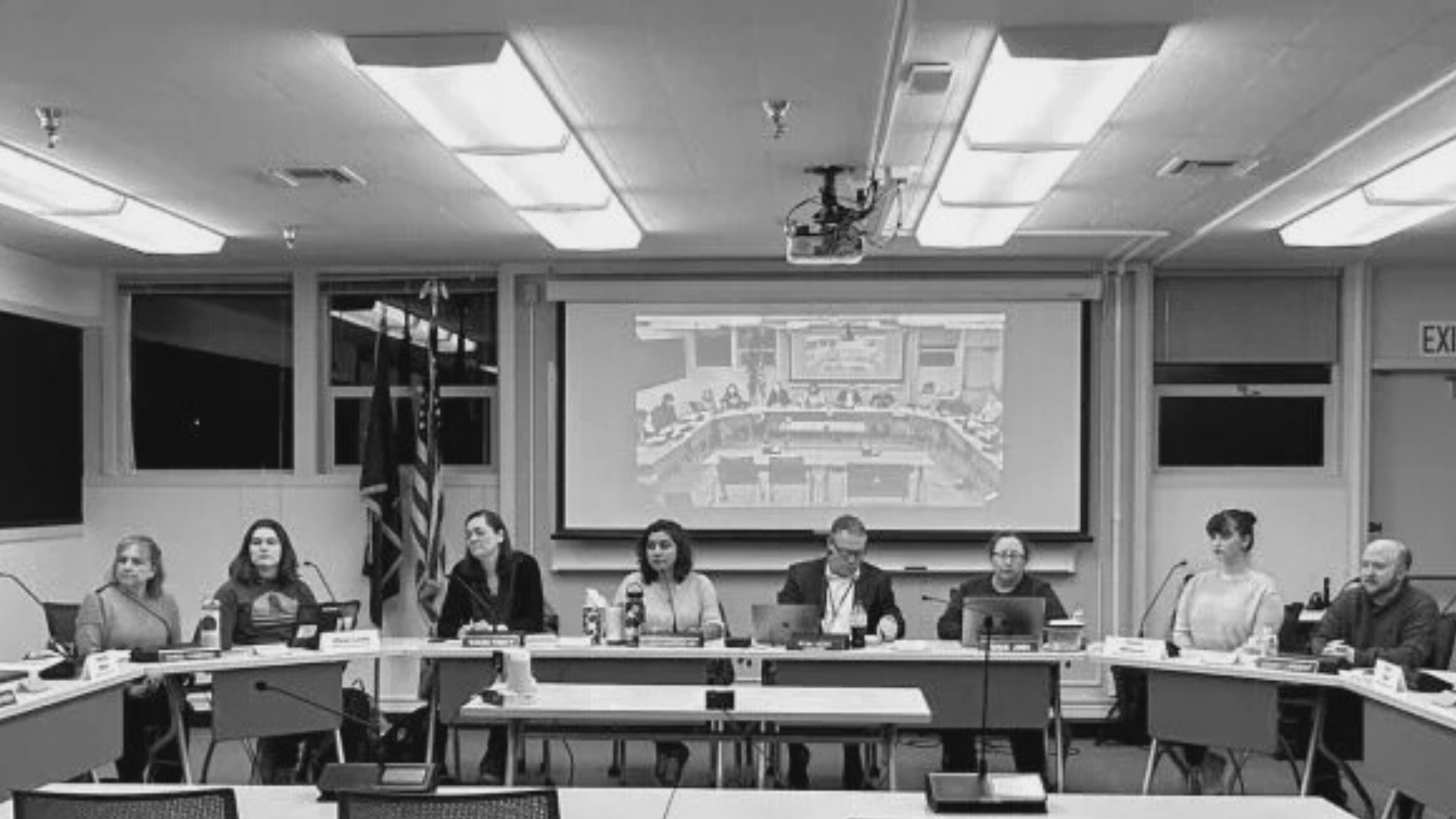
 Efforts to recall the Corvallis School Board have ended. On Monday, April 6, Save Corvallis Schools announced their petition for a special election had fallen short of enough signatures.
Julie Alexander of the campaign has not yet disclosed final figures. She did, however, share that the board members that drew the most fire, and the most signatures, were Sami Al-Abdrabbuh, Chris Hawkins and Luhui Whitebear.
Save Corvallis Schools had petitioned to recall all seven of the board’s members. But from the beginning, it was clear to many within the group and observers from the outside that Al-Abdrabbuh and Whitebear would be the most vulnerable.

To make it to the ballot, Save Corvallis Schools would have needed 4,577 signatures from registered voters in the district. That total is based on 15% of voter turnout in the last gubernatorial election within the school district’s boundaries. Oregon law sets that number and a ninety-day deadline to gather the minimum.
The issues
A diversity of issues motivated the campaign. There have been longstanding concerns throughout the community about academic outcomes for the district’s students and most especially in regard to reading and math. District decisions about math programming have been notably controversial.
Save Corvallis Schools has been especially critical of the district’s financial management. They point out that in 2018 the district persuaded voters to approve tens of millions in added tax burden to renovate schools, and then only seven years later, the district assessed they would need to close some of those campuses. Save Corvallis Schools argues the district’s mistake was both expensive and avoidable – that the district has failed to implement relatively standard management practices that would allow the board and administration to better anticipate future needs.
Recall supporters also argue the district’s school closure process has been egregiously flawed and potentially puts some students in facilities that are unsafe and unhealthy.
Whitebear and Al-Abdrabbuh respond
School Board member Luhui Whitebear responding to the news about the recall said, “I deeply appreciate the community’s continued support of my service on the Corvallis School Board. I’m also thankful that the district will be able to keep resources in place directed to the schools instead of spending them on an out of season election, especially in the budget climate we are in. I look forward to continuing to work with community members on the future of education in our local community during this time of transition.”
School Board member Sami Al-Abdrabbuh said, ““I’m so thankful to continue serving as a volunteer school board member. My commitment continues on student success and to strengthen how the board can learn and communicate about public education challenges and opportunities, so that our decisions, policies, and actions are accessible and truly reflect the needs of every community member and each child attending our public schools — especially those who have been, and continue to be, underserved and unheard.”
This became political
By state law, school board seats are nonpartisan in Oregon. Candidates do not run as affiliated or not affiliated, and there are no primaries. However, parties are free to issue endorsements. And that is exactly what the Benton County Democratic Party precinct committee did.
They endorsed against the Save Corvallis Schools recall effort.
The committee discussion at the time was that the current School Board consists of members endorsed by the Party. For some on the precinct committee, this raised the question of an obligation to be supportive. Others expressed the view that the recall campaign could be a Republican or right-wing effort.
We could never corroborate claims that Save Corvallis Schools is partisan, rather, it appears the opposite has been the case. They have members from both major parties, and their arguments do not appear to be ideologically driven in any political sense. They have eschewed all the standard dog-whistle issues along the political spectrum, and have consistently focused on academics, management practices and facility health and safety concerns.
At one point, we corroborated that a number of school board members had contacted businesses that were permitting petition signing events on their premises, and that owners and managers perceived those contacts as pressure.
Our analysis
This is our analysis. If Save Corvallis Schools had the benefit of political experience and know how, the recall may have made the ballot. Politicos know how to deliver the talking points fast, memorable and compelling. They know how to staff-up volunteers and set events like petition signings before day one. This campaign had none of that, what it did have were worried parents.
And they are not alone. We think there is an undercurrent of untapped worry about our schools among Corvallisites.
And here is the quiet part. Ultimately, it is too early to tell what the state of the local zeitgeist will be during the next couple of school board elections. However, for prospective challengers with substantive political skills or willingness to learn those skills, there is an undeniable opportunity.
By Steven J. Schultz and Hallie Greenberg
Do you have a story for The Advocate? Email editor@corvallisadvocate.com