


Staff at La Pulga Fantástica remembered what a full house feels like as they pushed through the constant flow of running meals, restocking coolers, bussing tables and cleaning spilled Modelo beers off the floor as customers cheered each time Mexico scored a goal against Ecuador Tuesday night.
The last time the flea market and restaurant was this busy was during a private concert last year.
The Mexican-owned business, like many Latino-owned businesses in Oregon, experienced a significant decline in customers as the Trump administration ramped up its immigration enforcement and launched an operation in the fall aimed at detaining people living across the Portland metro region and Willamette Valley.
But with the World Cup taking place this summer, those businesses are seeing an uptick in the community and celebration that they’ve missed, as well as a temporary sense of normality.
“There were months where we wouldn’t have anyone come into the restaurant,” said Miriam Martinez, who co-owns the flea market with her parents. “The vendors were also scared and they didn’t want to open, and our employees too. It impacted us heavily, and it took a while for people to feel safe again.”
The crowd collectively let out frustrated sighs each time the Mexican soccer team missed a shot. And the two times Mexico did score, fans jumped, whistled and hugged each other, with many waving the Mexican flags they had brought from home.
“With the World Cup happening here in the U.S., Mexico and Canada, it just makes it feel closer to home,” Martinez said. “I feel like it allows people to want to come and support local Hispanic businesses.”
Martinez said Mexico’s strong team gave her a renewed sense of hope in her community after months of unease.
Mexico’s 2-0 win marked the first time the team had won a game in the knockout round since 1986, meaning it is officially one of 16 teams remaining in the tournament.
Most Oregon immigration arrests under Trump took place in Portland
Most federal immigration detentions in 2025 and early 2026 in Oregon took place in the Portland metro region.
At least 1,500 of the 1,980 immigration arrests that took place in Oregon in all of 2025 and in the first three months of 2026 occurred in the Portland region, according to data from the Deportation Data Project, a database run by lawyers and academics who collected nationwide Immigration and Customs Enforcement arrest data from public records requests between Oct. 1, 2022 and March 10, 2026.
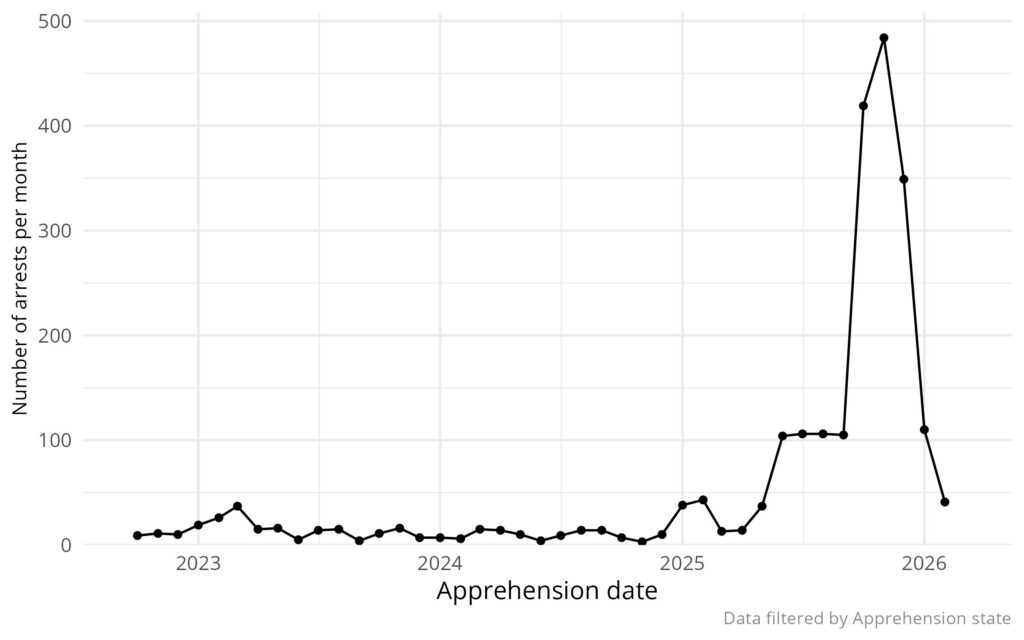 Federal immigration arrests in Oregon peaked in November 2025 when agents detained 484 people, according to data from the Deportation Data Project, a database run by lawyers and academics who collected national ICE arrest data from public records requests between Oct. 1, 2022 and March 10, 2026. (Courtesy of the Deportation Data Project)
Most of those arrests occurred in the fall, when federal immigration arrests peaked in Oregon in November with nearly 500 detentions.
“Our community has changed a lot,” said Beto Hernandez, a Gresham local originally from Queretaro, Mexico, who came to the flea market to watch the game. “This town used to be calm and relaxed, but we’ve never seen so much fear until now. It’s sad.”
State Rep. Ricki Ruiz, D-Gresham, said the fear in the community was obvious last fall. Ruiz grew up selling candy in the same flea market.
“If there was ICE activity as heavy as it was a couple months ago, I can guarantee you this place would have been empty,” he said.
Gresham, a diverse suburb of Portland, is Oregon’s fourth largest city. Almost a quarter of its population is Hispanic or Latino, according to the U.S. Census Bureau.
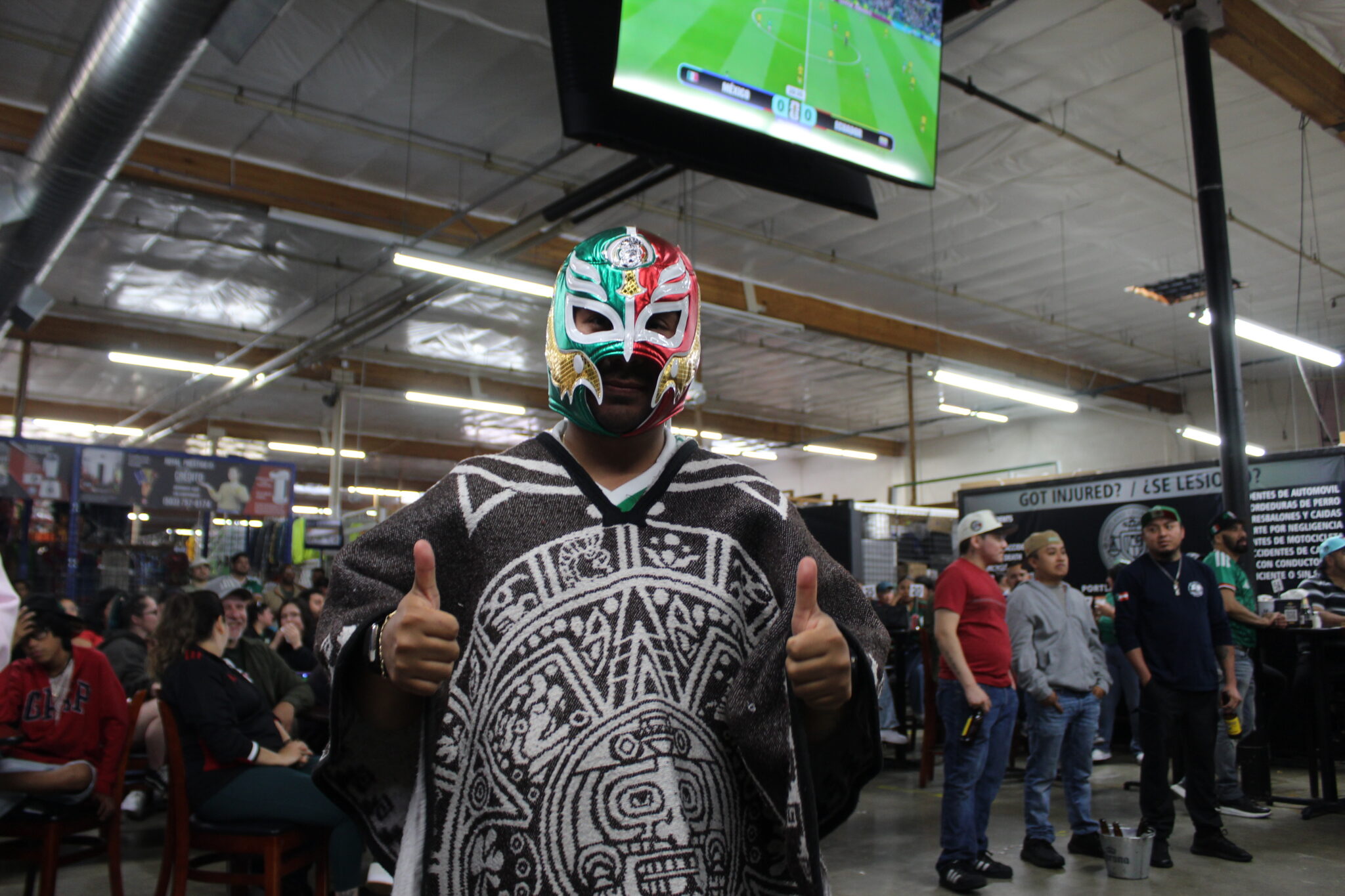
“The World Cup is a month-long tournament where people come together and forget about everything else going on around the world,” Ruiz said. “I see people who aren’t Mexican wearing Mexico jerseys here, and that’s because they want to be involved in the community and a part of the hype of what the World Cup is. And that’s a testament of people coming together to watch something that they love.”
‘We’re slowly getting there’: World Cup helps bring back sense of normality
At Xicha Brewing in Salem, owner Maggie Antunez said she noticed fewer customers and more community members scared to leave their homes, cars or shop for groceries late last year.
The brewery still went all out on its World Cup watch parties, even renting out a 20-foot TV to watch the latest Mexico game.
“Growing up, soccer was huge in our homes, and this is how we want to celebrate it,” Antunez told the Capital Chronicle. “We have a beautiful space where we are welcoming to everyone and people feel at home, people feel safe and people feel just happy to come in and share that with the neighbor on the other table.”
But things still aren’t back to normal despite the high turnout for its soccer watch parties, she said.
“We’ve had amazing support from the community with the World Cup, but on the days when games aren’t streaming, we’re not at what we used to be for numbers and guests coming in the door,” she said.
And with the minimum wage going up 50 cents an hour this week, she said it’s harder to have people on payroll all the time. She’s resorted to hiring temporary staff to help during the busy season.
The family-owned Portland Mexican restaurant Domingos late last year also struggled with declining customers, as well as calls from people threatening to detain its employees.
The restaurant, however, has seen an influx of people come in at lunch and dinners to watch the World Cup games.
“We’ve definitely come back a little bit,” said Leslie Carrasco, the co-owner of the restaurant. “But I definitely don’t think things are 100% back to normal. We’re slowly getting there.”
By Maldonado of news partner Oregon Capital Chronicle
Do you have a story for The Advocate? Email editor@corvallisadvocate.com