

On Friday, The Arts Center of Greater Corvallis announced they had received a generous gift and would be undertaking a largescale expansion.
Just west of their current digs, they’ve acquired the adjacent three story-building located at 760 SW Madison Avenue. It’s much larger than their current facility. The purchase price was just over $2 million. The deal closed on January 29, 2026. Ultimately, The Arts Center will have operations in both buildings.
“Together, the two buildings will be thoughtfully renovated to expand arts education, increase accessibility, and deepen the organization’s service to the community,” according to spokesperson Vanessa Smith.
Renovations are anticipated to take place over about three years, with work on the newly acquired building occurring first, followed by updates to The Arts Center’s original facility.
Both buildings will be retrofitted with elevators to ensure full accessibility.
Arts Center Board President, Nell O’Malley said, “It is deeply rewarding to be able to expand arts offerings in Corvallis during uncertain times. Artistic expression is needed more than ever and this feels particularly serendipitous.”
Gifted funds, ambitious goals
According to Smith, the expansion was launched with a generous lead gift from the Bob and Kitty Bunn Family Funds of Oregon Community Foundation and Benton Community Foundation. Additional private support has also been secured, and a capital campaign to support the project is expected to launch in mid-2026.
“This expansion is about more than additional space—it’s about expanding access to creativity. Dedicated classrooms for multiple forms of art-making will allow The Arts Center to significantly grow our arts education programs and better serve our community. It’s an investment in creativity, connection, and the cultural vitality of Corvallis,” said Executive Director Erinn Gavaghan.
Improvements and renovations are planned for the exhibition galleries and the ArtShop. Expansions are planned for the Center’s arts education spaces for ceramics, printmaking, glass, jewelry-making, digital art, and 2D studio classes. Affordable studio spaces for working artists and additional administrative spaces to support growing programs will also be added.
History of the current building
 700 SW Madison, the original and current home of The Arts Center, was a religious assembly hall originally built by the Episcopal Church of the Good Samaritan. The church built the hall in 1889 and moved to a new location in1962.
While that was happening, a grassroots effort by artists, civic leaders, and university art departments led to the establishment of the Corvallis Arts Council, the state’s first arts council and the 27th in the United States. A deal was struck for what we now call the Arts Center to move into the hall.
The grand opening happened January 26, 1963. The exhibitors included graphic artist Junichiro Sekino (1914–1988) of Tokyo as well as a host of staff from the Art Department of Oregon State University. Local art groups came to demonstrate techniques, including the Corvallis Weavers Guild and the Clay Clan, as well as other craftspeople. There were live music performances. Over 7,000 people from around Oregon visited the center over its first weekend.
In 1970, the building was moved about one block north to its current location, In September 1971, the building was added to the National Register of Historic Places.
History of the new building
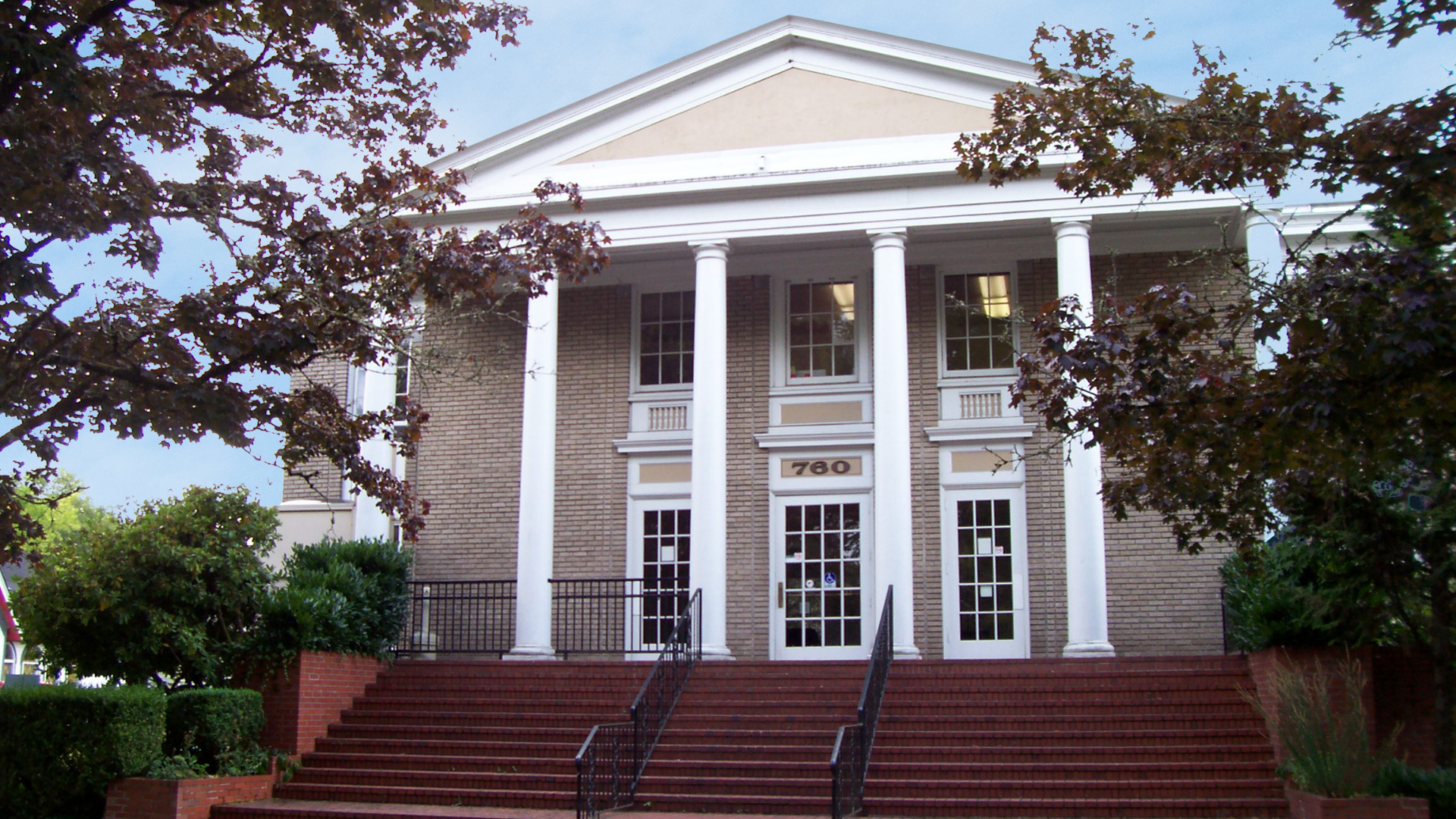 760 SW Madsion started as a church for The Congregationalists of Corvallis. The church requested $10,000 from the Church Building Society and finally purchased the lot off Madison and 8th in 1916. At a total cost of $15,000, construction was completed in 1917 and the church held its first service on April 5, 1918.
The building continued to be used by members of the Congregationalist church for 17 years, before being sold to J. B. Hollingsworth and his business partner Raymond A. DeMoss, Corvallis funeral home directors, in 1935. They renamed the building DeMoss–Durdan Mortuary and operated the building as a mortuary until DeMoss’ death in 1978.
Most recently, the building has been offered as office rentals.
By Hallie Greenberg. Steven J. Schultz contributed to this story.
Do you have a story for The Advocate? Email editor@corvallisadvocate.com