

 In a time of economic uncertainty such as now, when a tank of gas might cost more than a week’s worth of food, one could make assumptions about what’s happening in Corvallis’ thrift stores, businesswise.
They could be hurting like other retailers, or they could be having a moment in the sun as folks need to economize. But what’s actually happening, according to Corvallis’ thrift store operators, is all of that, and few other things too. Each is responding uniquely.
While many resellers acquire clothes at a low price and then turn those pieces into revenue by marking them up, some rely on a niche that is currently shrinking, and they are needing to adjust.

Jairus Lovell, owner and co-founder of TSA Vintage, a local reseller in Corvallis, says that to maintain his customer base while also maintaining a consistent profit margin, he has had to “niche down” a small upmarket subset of the clothing he supplies.
“Instead of trying to sell a $200, 70’s, Led Zeppelin t-shirt, I would rather get a 90’s A’s t-shirt that I can sell from 20 to 25 dollars.” Aiming to curate a less pricy, more accessible selection, rather than a pot of gold for the “rare grandpa or dad that comes in here from Portland” who might be more willing to pay larger sums of money for niche items than the average customer.
Besides an effort to niche down in product, business owners such as Lovell are also building services outside their usual forte, such as alterations and mending to make a little extra profit to sustain their business through cyclical ups and downs of the economy.
For Josie Wolf, Co-Owner of Consign a Bubble, a Corvallis based Children’s consignment store, diversifying revenue streams is key. In a time where she cites lower foot traffic, and less spending, it has become integral for her business to expand. To do so, her team is working to open a party room, and they have expanded their efforts on eBay, where they list and sell high value items from the store.
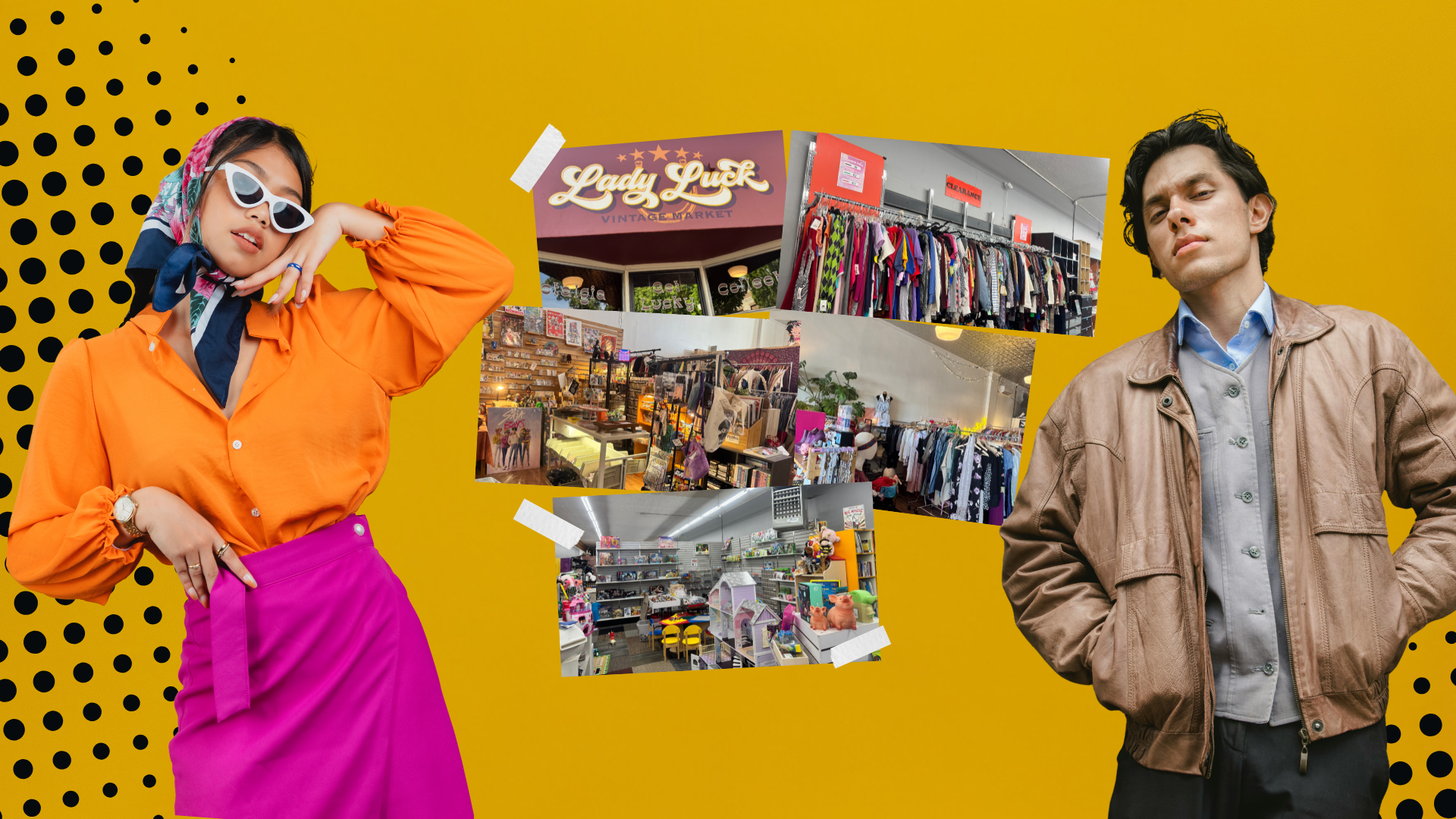
But not everyone is having the same experience. Store owners such as Kate Dillon, owner of Lady Luck Vintage Market, say business is booming. Dillon cites a 19% increase in revenue since last year, partially credited to the ways in which her store functions as both a place for people to find items sold inexpensively, but also because people can make money by selling their clothes directly to her to be sold in the store.
She talks about her widening customer base, saying, “When a recession comes about, it almost forces people out into the world of second hand.” From there, she says, they soon realize what they have been missing out on, creating a new wave of customers who might stick to second hand, in a way they previously hadn’t.
Dillon believes her business may be thriving due to several factors, including the fact that it’s not beholden to recent rising tariffs, like an online source such as Depop or any firsthand brand might be. When consumers are already concerned about the lessening weight in their pockets, shipping costs may not fly.
“When times are tough, financially you’re forced out of your bubble a little bit in a lot of ways,” says Dillon.
This is true even at stores that don’t curate clothing specifically for their audience. Ann Ross, manager of the Corvallis Arc Thrift store, a store that sees a wide variety of customers such as students, elderly folks and young families, says that although she can’t nail down the reason for the increase in customers, she can confidently say that she has “seen more people become interested in thrifting” and she’s pretty sure “the economic situation is part of that.”
Oregon State University Political Economist Prof. Allison Johnston says that could be a logical conclusion, as people are facing economic repercussions they may be choosing to shop second-hand, possibly for the first time in their lives. Johnston cites the Strait of Hormuz’s ongoing closure as currently driving a more difficult economy.
Overall, times are undeniably tough, but some would say they’ve seen it tougher.
Lady Luck Vintage’s Dillon recalls her time working at downtown consignment store Second Glance during the height of the 2007-2009 “Great recession”, where she says she “watched several other consignment shops open in downtown while other businesses were closing.”
It was then that she says she “learned that there is an uptick in sales and new customers who are seeking more affordable options during financially hard times and are also more interested in making money from what’s in their closet.”
By Campbell Grove
Do you have a story for The Advocate? Email editor@corvallisadvocate.com