

For Munira Ibrahim, community service and health equity have been two of the most important parts of the pharmacy school experience.
While simultaneously earning her Doctor of Pharmacy and Master of Business Administration degrees from Oregon State University, Ibrahim also served as president of the Student National Pharmaceutical Association. She worked with other student leaders to organize health screenings and educational events for public health and HIV awareness, with a focus on reaching historically underserved communities across Oregon.
She also helped run blood pressure and glucose screenings, mentorship programs and healthcare career outreach for students from underrepresented backgrounds.
“Many of these experiences reinforced that access to quality care is often influenced by factors far beyond a diagnosis or prescription,” Ibrahim said. “Whether it was helping patients navigate medication affordability, discussing preventive health at community events or mentoring students considering healthcare careers, I became increasingly passionate about addressing barriers that affect health outcomes.”
Her volunteer experiences helped her see the impact pharmacists can have as advocates, educators and leaders, in addition to providing medication expertise.
Ibrahim also witnessed that impact during her three years as an inpatient pharmacy intern at Oregon Health & Science University, where she worked across many specialties, including cardiology, pharmacy compliance, hospital operations, discharge counseling, direct patient care and others.
“What made the experience most meaningful was the opportunity to work alongside pharmacists who were deeply invested in teaching and mentoring students,” Ibrahim said. “The internship allowed me to see firsthand how pharmacists improve patient outcomes not only at the bedside, but also through leadership, innovation and systems-based problem-solving.”
During her MBA studies, Ibrahim discovered her passion for health-system leadership and operational improvement, igniting a desire to work at the intersection of the two areas to improve patient care and the healthcare system as a whole.
“Long term, I hope to build a career as a cardiology pharmacist while remaining involved in health-system leadership, quality improvement and efforts to expand access to high-quality care,” she said.
After graduation, Ibrahim will head to the University of Minnesota Medical Center for a post-graduate year 1 pharmacy residency, where she will continue building her clinical skills across a variety of practice settings.
Looking back, she said she’s found that success is rarely a linear path, but setbacks and moments of uncertainty often lead to the greatest lessons. She’s also learned not to wait until she feels completely ready before making big moves.
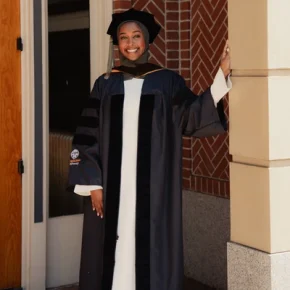 “Some of the opportunities that had the greatest impact on my life were the ones I almost talked myself out of pursuing because I didn’t feel ready,” she said. “Growth often happens before confidence does.”
Ibrahim also wants younger students in healthcare to stay connected to their purpose.
“The coursework, exams and long hours can sometimes make it easy to lose sight of why you’re there,” she said. “Remembering the patients, families and communities you hope to serve helps put everything into perspective.”
By Molly Rosbach
Do you have a story for The Advocate? Email editor@corvallisadvocate.com